

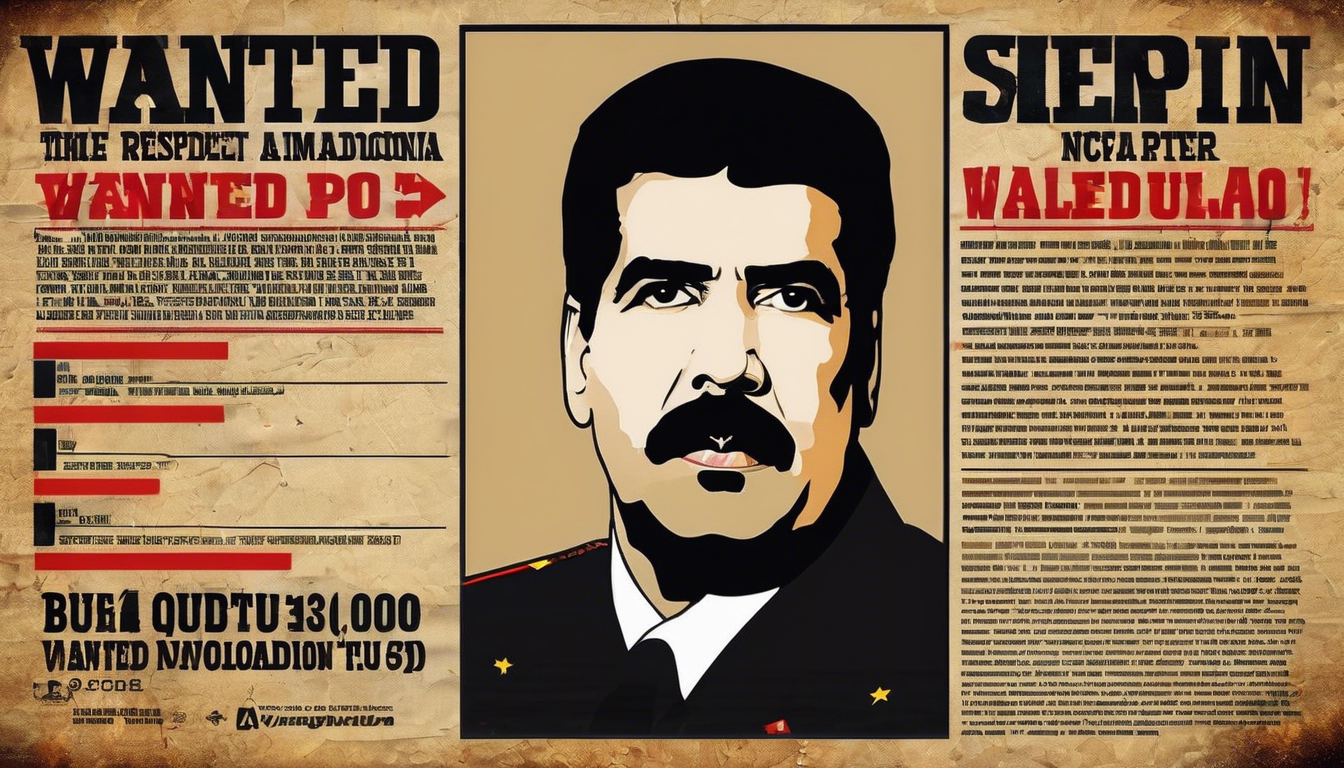
Nicolás Maduro Wanted: Inside the US Reward for Venezuela’s Leader
Introduction: The Background of Nicolás Maduro
Nicolás Maduro, born on November 23, 1962, in Caracas, Venezuela, rose from humble beginnings to become one of the most contentious leaders in Latin America. A former bus driver and union organizer, Maduro became politically active in the 1990s as a member of the Fifth Republic Movement, a party founded by Hugo Chávez. His political career gained momentum when Chávez appointed him to key governmental roles, including serving as Foreign Minister from 2006 to 2013. Following Chávez’s death in 2013, Maduro assumed the presidency, continuing the socialist platform of his predecessor but facing significant criticism over Venezuela’s economic collapse and human rights issues.
The US Indictment: Overview of Charges Against Maduro
The U.S. Department of Justice has accused Nicolás Maduro of leading a narco-terrorism conspiracy that undermines democracy and fuels international crime. Charges against Maduro allege he collaborated with the Colombian guerrilla group FARC to transport cocaine for global distribution, including to the U.S. Authorities claim he used Venezuelan state resources, including security forces, as tools for narcotics trafficking. The indictment further accuses him of money laundering and accepting bribes to advance illicit operations. These allegations form part of broader investigations into corruption within Maduro’s administration, stretching beyond narcotics into arms deals and financial fraud.
The $50 Million Bounty: Why the US Wants Maduro
The United States has placed a $50 million bounty on Nicolás Maduro, accusing him of criminal activities tied to drug trafficking and corruption. According to the U.S. Department of Justice, Maduro allegedly collaborated with drug cartels, specifically the Colombian FARC group, in a scheme to funnel narcotics into North America. Officials claim he used his political position to support operations that destabilized global markets and endangered public safety.
The bounty was announced as part of an effort to address transnational organized crime. The U.S. alleges these activities have intensified Venezuela’s humanitarian crisis. Maduro denies these allegations, calling them political provocations.
The Role of Drug Trafficking Allegations
The United States government has accused Nicolás Maduro of facilitating and profiting from drug trafficking operations, which it alleges are tied to a criminal enterprise known as the Cartel of the Suns. This cartel reportedly involves high-ranking members of Venezuela’s military and government.
Authorities claim Maduro used his position to support the shipment of cocaine to the U.S. and other countries, bolstering illicit revenue streams while crippling legitimate frameworks. These allegations serve as key grounds for sanctions and his inclusion in international criminal investigations. Through these accusations, the U.S. has intensified efforts to pressure his administration and disrupt alleged operations.
Geopolitical and Diplomatic Implications
The U.S. reward offer for Nicolás Maduro highlights intense geopolitical tensions between Washington and Caracas. This action strained diplomatic relations with Venezuela’s allies, including Russia, China, and Iran, which condemned the move as interference in sovereign affairs. Regional partnerships, such as those with Colombia and Brazil, also factor into the broader strategy against Maduro’s administration.
The case complicates multilateral negotiations, particularly within organizations like the United Nations, where member states remain divided on recognizing Venezuela’s leadership. Furthermore, the reward stirs debates over jurisdictional overreach and the use of legal tools in international politics. Such measures reflect a high-stakes power struggle, influencing global alliances.
Reactions from Venezuela and International Stakeholders
The announcement of a reward for Nicolás Maduro elicited diverse responses from Venezuelan officials and international actors.
- Venezuelan Government: Senior officials in Caracas denounced the U.S. measures as imperialistic and aimed at undermining Venezuela’s sovereignty. Maduro labeled the action as “a desperate ploy” to oust his administration.
- Opposition Groups: Domestic opposition leaders welcomed the development, arguing it highlighted the alleged corruption and criminal charges tied to Maduro’s government.
- Global Reactions: Key allies like Russia and Cuba criticized the U.S., calling the bounty a provocation. Meanwhile, Western powers, including the European Union, stated the need for peaceful and democratic solutions to Venezuela’s crisis.
Conclusion: What Lies Ahead for Nicolás Maduro
Nicolás Maduro faces continued international scrutiny, with the U.S. offering a reward for information leading to his legal capture. His leadership has sparked polarized opinions globally, while Venezuela grapples with economic instability and human rights concerns. Key developments to monitor include:
- Ongoing US-Venezuela Tensions: Relations remain strained due to sanctions and allegations of corruption.
- Opposition Movements: Venezuelan opposition groups seek pathways for political change.
- Global Responses: Nations may realign stances influenced by geopolitical and strategic interests.
The trajectory of Maduro’s future will hinge on emerging diplomatic shifts, internal political dynamics, and judicial leverage reinforced by international actions.

